
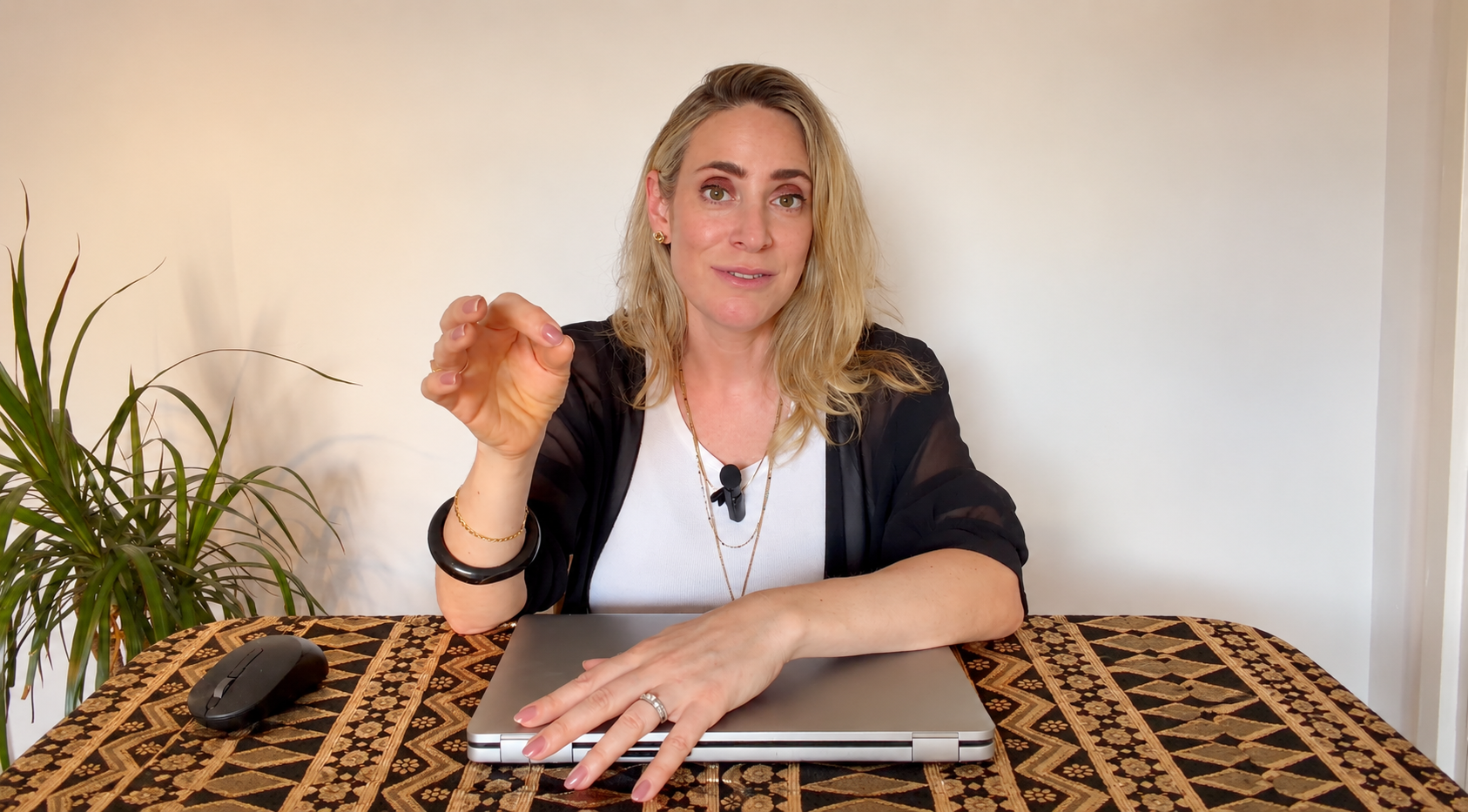
WHAT DO I SAY?
You know exactly what you want to say. Until you're actually in the conversation.
Suddenly, you're saying yes when you mean no, explaining yourself more than you intended, or struggling to find the right words.
And afterwards? You're replaying the conversation, wishing you'd handled it differently.
But perhaps you've never really thought of this as a problem.
Maybe you're just the helpful one.
The good listener.
The person who doesn't like making things awkward.
You agree to things because you don't want to disappoint people. You soften your opinions to avoid disagreements. You explain yourself a little more than necessary because you want to make sure nobody misunderstands you.
And you've always thought that's simply who you are.
After all, what's wrong with being kind, considerate and easy-going?
Nothing. Until you start noticing how much energy it takes.
The frustration of agreeing to something you didn't really want to do.
The conversations you replay for hours, wondering whether you said the wrong thing.
The resentment that quietly builds when you're always accommodating everyone else.
The mental exhaustion of constantly thinking about how you're coming across, whether someone is upset or whether you've disappointed them.
Sometimes you might even avoid certain conversations altogether because dealing with the possible awkwardness feels harder than staying quiet.
You might not realise just how much of your time and energy goes into keeping everyone else comfortable.
And perhaps you've started wondering why certain people, conversations or situations leave you feeling so drained.
Or maybe you already know you're a people-pleaser.
You've read about boundaries. You know you're allowed to say no. You understand that you can't keep everyone happy.
But knowing all of that doesn't necessarily help when you're actually in the conversation.
Someone looks disappointed, questions your decision or pushes back, and suddenly you're explaining, apologising or agreeing when you didn't mean to.
Because knowing what you want to say and being able to say it in the moment are two very different things.
That's where WHAT DO I SAY? comes in.
A practical, psychology-based course designed to help you understand what happens when communication becomes uncomfortable, recognise your automatic responses and learn how to respond differently.
Not by memorising the perfect script.
Because real conversations don't follow scripts.
But by developing the awareness, practical skills and self-trust to work out what you actually want to say, how you want to say it, and how to stay with your message even when the other person doesn't respond exactly as you'd hoped.
THIS COURSE MAY BE FOR YOU IF...
You often:
Say yes when you really want to say no.
Rehearse conversations in your head before they happen.
Think of the perfect response hours after a conversation is over.
Over-explain because you want the other person to understand your reasons.
Add “maybe”, “just”, “I don't know” or “sorry” to soften what you mean.
Worry that being direct will make you seem rude, difficult or selfish.
Change your answer when someone looks disappointed.
Feel responsible for other people's reactions.
Avoid conversations because you're worried about how they'll go.
Set a boundary, then feel guilty or start questioning yourself afterwards.
Understand boundaries intellectually but struggle to use them when it matters.
And perhaps you're getting tired of how much thought and energy goes into conversations that seem so much easier for everyone else.
The aim isn't to turn you into someone cold, confrontational or endlessly assertive.
You can still be warm.
You can still care about people.
You can still compromise.
You can still be the kind, thoughtful person you've always been.
You're simply learning that your needs, preferences and voice are allowed into the conversation too.
LAUNCH PRICE: £49.50 instead of £99- 50% off for a limited time only
A quick note: You'll be asked to create a free course login before payment. This lets you access your lessons anytime. £49.50 is a one-time payment - no subscription or recurring charges.

WHAT DO THEY SAY ABOUT WHAT DO I SAY?
“I never realised how much I explained myself just to make sure nobody was upset with me. The practical examples helped me understand what to say instead. I'm learning that I can be kind without justifying every decision”.
S.M.
“What I loved most was that this wasn't about becoming confrontational or selfish. It was about learning how to speak up without feeling like I was doing something wrong..”
Tila. O.“I always knew what I wanted to say about three hours after the conversation had ended! Having actual phrases to practise has made difficult conversations feel so much more manageable.”
I.L.
“'I’ve read so much about boundaries and people-pleasing, but I needed someone to show me what to actually do. This course made the connection between understanding my behaviour and changing it.”
Songul. T.
WHAT YOU'LL LEARN
The course takes you through 6 short, easy-to-digest video modules, each with practical exercises in your accompanying Master Playbook to help you put what you learn into practice.
You'll go from understanding why you freeze, people-please or over-explain in uncomfortable moments to learning how to communicate clearly, set boundaries and respond differently in real-life conversations.
By the end of WHAT DO I SAY?, you’ll be better able to:
say no without a five-minute explanation
answer intrusive questions without panicking
stop changing your answer when someone looks disappointed
start difficult conversations without rehearsing them 30 times
know when you’ve said enough and stop talking 😅
MODULE 1 - Why Don’t I Know What to Say?
Discover why you freeze, people-please, avoid conflict or over-explain when conversations become uncomfortable.
You'll learn to recognise your automatic communication patterns, understand what they're trying to protect you from, and begin responding with more choice rather than reacting on autopilot.
MODULE 2 - Saying No Without the Essay
Ever said yes just to avoid disappointing someone, then spent the rest of the day regretting it?
Or finally said no, only to follow it with five explanations, three apologies and a sudden urge to change your mind?
In this module, you'll learn how to say no clearly, without over-explaining, apologising or feeling responsible for someone else's disappointment and how to stick with your answer even when the guilt kicks in.

MODULE 3 - Boundaries That Actually Make Sense
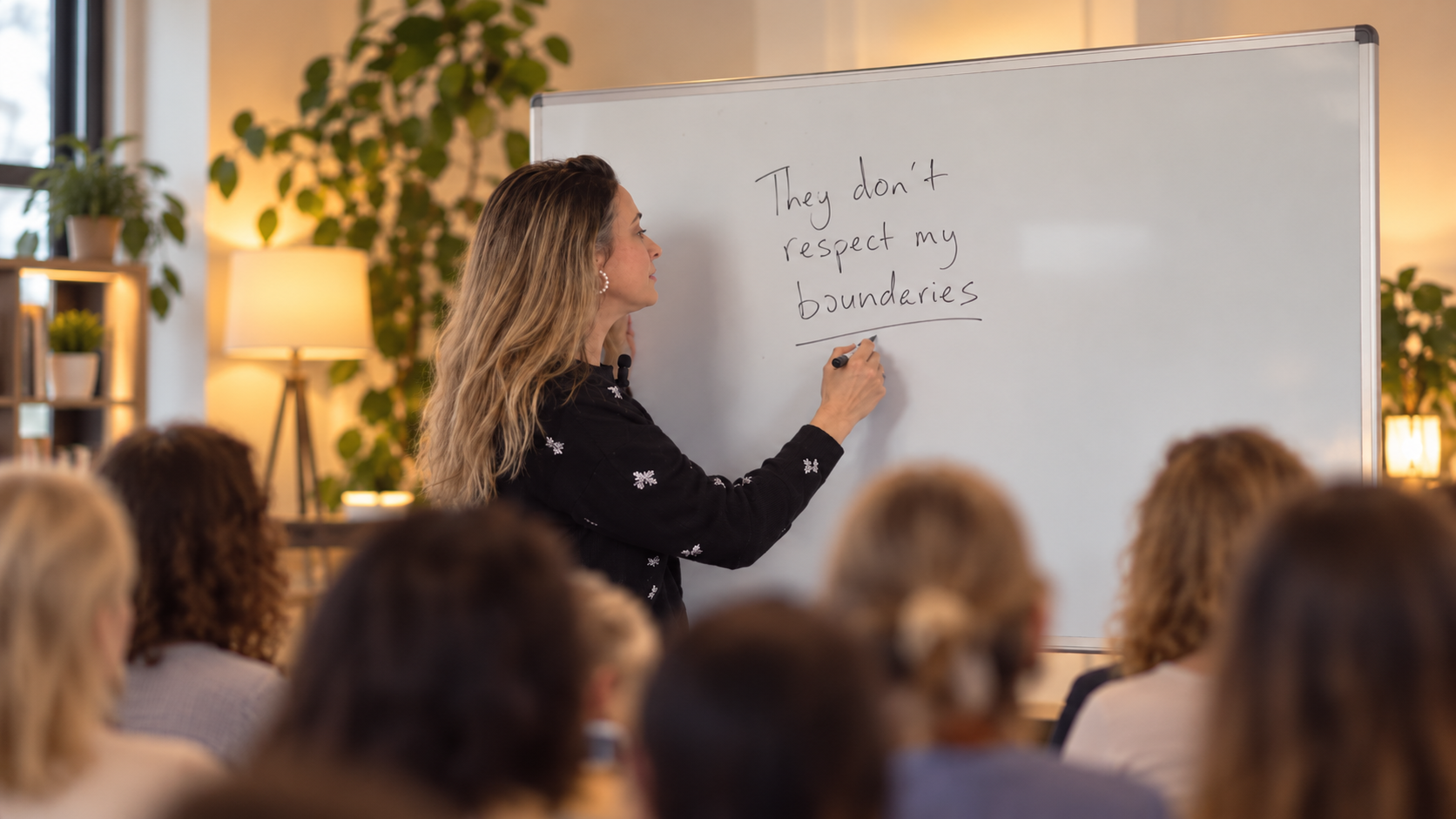
Ever told someone you're not okay with something, only for them to do it again?
You explain, remind them, get frustrated… and wonder how many times you have to say it before they finally listen.
In this module, you'll learn the difference between making a request, setting a boundary and trying to control someone else's behaviour.
You'll practise communicating boundaries clearly and discover what you can actually do when someone doesn't respect them instead of feeling stuck waiting for them to change.

LAUNCH PRICE: £49.50 instead of £99- 50% off for a limited time only
A quick note: You'll be asked to create a free course login before payment. This lets you access your lessons anytime. £49.50 is a one-time payment - no subscription or recurring charges.
MODULE 4 - Difficult Conversations
Ever rehearsed a difficult conversation twenty times in your head… but still couldn't bring yourself to have it?
You worry they'll get upset, you'll say the wrong thing, or the conversation will turn into an argument. So you put it off. Again.
In this module, you'll learn how to start difficult conversations, say what you actually mean and stay on track when things don't go as planned without needing to predict or control the other person's reaction.
MODULE 5 - When They Don't Like Your Answer
Ever finally stood up for yourself, only to start backtracking the moment someone looked disappointed?
They question you, get upset or push back. Suddenly, you're explaining yourself again, feeling guilty or wondering whether you were too harsh.
In this module, you'll learn how to handle pushback without immediately giving in, recognise when you've already said enough, and stop treating someone else's disappointment as proof you've done something wrong.
You'll also explore how to respond when you're the one hearing no.

LAUNCH PRICE: £49.50 instead of £99- 50% off for a limited time only
A quick note: You'll be asked to create a free course login before payment. This lets you access your lessons anytime. £49.50 is a one-time payment no subscription or recurring charges.
MODULE 6 - Say Enough, Then Stop
Ever said exactly what you meant… then kept talking until you practically talked yourself out of it?
You add another reason, apologise, soften your words or fill the silence because you're worried you've sounded rude.
In this module, you'll learn how to recognise when you've already said enough, stop explaining yourself out of guilt and feel more comfortable letting your words stand.
Because you don't have to choose between being kind and being clear. You can be both.
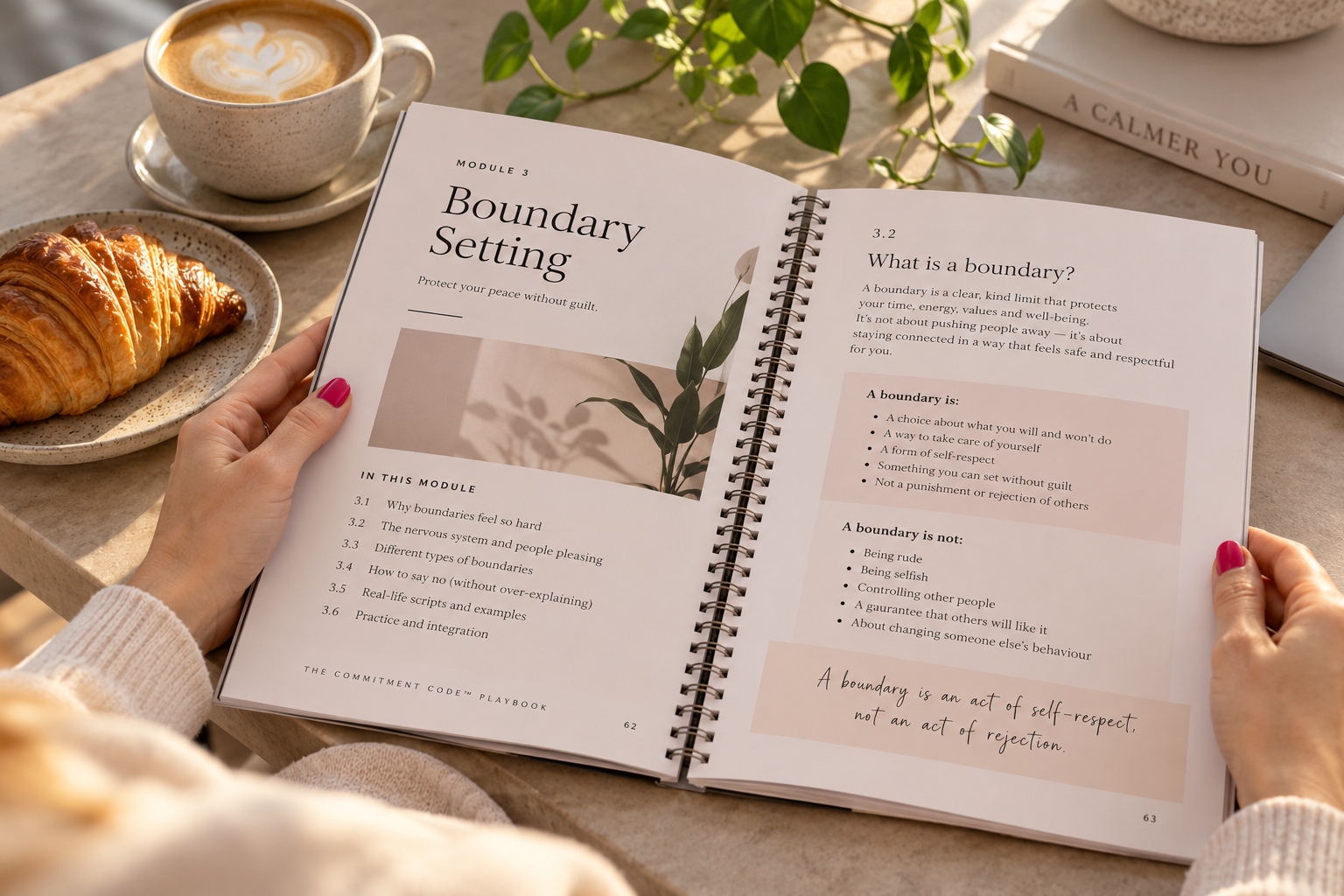
YOUR FILLABLE COURSE PLAYBOOK
This isn't a course you're meant to simply watch and forget.
You'll also receive a fillable and printable playbook covering all six modules.
Throughout the course, you'll use it to:
• identify your own communication patterns
• reflect on what happens when interactions become uncomfortable
• recognise the thoughts and meanings driving your responses
• work through real situations from your own life
• practise alternative ways of responding
• plan small behavioural experiments
• take what you're learning into conversations during the week
• notice what changes when you begin responding differently
The aim is to move from:
“Yes, I understand why I do this.”
to:
“I'm actually doing something different.”
WHO AM I & WHY WHAT DO I SAY?
Hi, I'm Shey 👋,
I'm a psychotherapist with nearly 20 years of clinical experience of helping people understand their thoughts, emotions and actions and make meaningful changes in their lives.
One thing I've seen time and again is that knowing what you want to say and actually being able to say it are two very different things.
You can understand boundaries, know you're allowed to say no and recognise when something doesn't feel right… yet still find yourself freezing, people-pleasing or explaining yourself for the tenth time.

And I know this not just as a therapist, but from personal experience.
Despite my professional training, I spent much of my own life people-pleasing, over-explaining and worrying about how others might react.
That's why I'm so passionate about helping people feel more comfortable being themselves and learning to express their needs, feelings and boundaries without constantly second-guessing themselves.
Because knowing your worth is one thing. Being able to communicate from that place, especially when it feels uncomfortable, is another.
And that's exactly why I created WHAT DO I SAY?
I wanted to bring the psychological understanding and practical tools I use in my work into a short, accessible course that helps you navigate those everyday conversations with greater clarity and confidence.
Because communication isn't just about finding the right words. It's also about what happens inside you when you try to say them.
WHAT THIS COURSE IS REALLY ABOUT
Ultimately, WHAT DO I SAY? isn't about finding one magical sentence that works in every situation.
There isn't one.
It's about becoming less dependent on getting every interaction right.
It's about being able to pause and ask:
What do I actually think?
What do I actually want?
What am I responsible for here and what am I not responsible for?
What needs to be said?
And can I allow that to be enough?
You may still feel uncomfortable sometimes.
Someone may still disagree with you.
You may occasionally stumble over your words.
But the goal is that discomfort no longer automatically decides what you say.
You become increasingly able to communicate from clarity rather than fear of the reaction.
6 MODULES • PRACTICAL PSYCHOLOGY • FILLABLE PLAYBOOK • LEARN AT YOUR OWN PACE
You don't need the perfect words.
You need to trust yourself enough to use your own.
A quick note: You'll be asked to create a free course login before payment. This lets you access your lessons anytime. £49.50 is a one-time payment - no subscription or recurring charges.
WHAT DO I SAY?
-
-
-
Lesson 1: Why Don’t I Know What to Say?
Why do your words sometimes disappear when you need them most? Learn what happens in those moments and begin recognising your automatic response patterns.
Why do your words sometimes disappear when you need them most? Learn what happens in those moments and begin recognising your automatic response patterns.
-
Lesson 2- Your Automatic Communication Pattern
Discover the automatic patterns you use to manage discomfort in conversations - from appeasing and avoiding to over-explaining or becoming defensive.
Discover the automatic patterns you use to manage discomfort in conversations - from appeasing and avoiding to over-explaining or becoming defensive.
-
Lesson 3 - The Pause Before You Work Out What to Say.
Learn how to create a small pause between discomfort and your automatic response, giving yourself enough space to check what you actually want and choose what to say next.
Learn how to create a small pause between discomfort and your automatic response, giving yourself enough space to check what you actually want and choose what to say next.
-
-
-
Lesson 1: When Someone Crosses a Boundary
Learn what a boundary really is - and what it isn’t. You’ll explore the difference between making a request, setting a boundary and trying to control someone else’s behaviour, so you can become clearer about what is actually within your control.
Learn what a boundary really is - and what it isn’t. You’ll explore the difference between making a request, setting a boundary and trying to control someone else’s behaviour, so you can become clearer about what is actually within your control.
-
Lesson 2: How to actually say "No"
Learn how to say no in a way that feels clear, natural and like you - without feeling you need to justify your answer or write an essay. You’ll explore different ways of saying no and begin practising responses you can actually use in real-life situations.
Learn how to say no in a way that feels clear, natural and like you - without feeling you need to justify your answer or write an essay. You’ll explore different ways of saying no and begin practising responses you can actually use in real-life situations.
-
Lesson 3: Dealing with after saying No
What happens after you say no can be just as important as saying it. Learn to notice the urge to explain, apologise or change your answer - and practise allowing your no to stand, even when it feels uncomfortable.
What happens after you say no can be just as important as saying it. Learn to notice the urge to explain, apologise or change your answer - and practise allowing your no to stand, even when it feels uncomfortable.
-
-
-
Lesson 1: What a Boundary Really Is (and What It Isn’t)
Learn what a boundary really is and what it isn’t. You’ll explore the difference between making a request, setting a boundary and trying to control someone else’s behaviour, so you can become clearer about what is actually within your control.
Learn what a boundary really is and what it isn’t. You’ll explore the difference between making a request, setting a boundary and trying to control someone else’s behaviour, so you can become clearer about what is actually within your control.
-
Lesson 2: How to Set a Boundary
Learn a simple way to communicate a boundary clearly: say what’s happening, say what you need, and say what you’ll do if needed - without over-explaining or turning it into a confrontation.
Learn a simple way to communicate a boundary clearly: say what’s happening, say what you need, and say what you’ll do if needed - without over-explaining or turning it into a confrontation.
-
Lesson 3: What If They Cross the Boundary Again?
What happens when you’ve communicated a boundary and the other person still crosses it? Learn when to repeat, clarify or take action - and how to focus on what you can control rather than trying to control their response.
What happens when you’ve communicated a boundary and the other person still crosses it? Learn when to repeat, clarify or take action - and how to focus on what you can control rather than trying to control their response.
-
-
-
Lesson 1: Before the Difficult Conversation
Learn how to get clear on what you actually want to communicate before a difficult conversation - separating your message from the reaction or outcome you’re hoping to get from the other person.
Learn how to get clear on what you actually want to communicate before a difficult conversation - separating your message from the reaction or outcome you’re hoping to get from the other person.
-
Lesson 2: How to have the conversation
Learn how to start a difficult conversation, stay connected to what you actually want to say, and respond when the conversation doesn’t go exactly as you planned - without losing your message along the way.
Learn how to start a difficult conversation, stay connected to what you actually want to say, and respond when the conversation doesn’t go exactly as you planned - without losing your message along the way.
-
Lesson 3: When the Conversation Doesn’t Go to Plan
Real conversations don’t follow a script. Learn how to handle unexpected reactions, disagreement or discomfort without abandoning your message - and how to recognise when you’ve said enough.
Real conversations don’t follow a script. Learn how to handle unexpected reactions, disagreement or discomfort without abandoning your message - and how to recognise when you’ve said enough.
-
-
-
Lesson 1: When They Don’t Like Your Answer
Saying what you mean is one thing - staying with it when someone looks disappointed, annoyed or disagrees can be much harder. Learn how to notice what their reaction triggers in you without automatically assuming it means you’ve done something wrong.
Saying what you mean is one thing - staying with it when someone looks disappointed, annoyed or disagrees can be much harder. Learn how to notice what their reaction triggers in you without automatically assuming it means you’ve done something wrong.
-
Lesson 2: When They Push Back
Learn what to do when someone questions, challenges or keeps pushing against your answer. You’ll practise recognising when to explain, when to clarify, and when it’s time to simply repeat your answer and let it stand.
Learn what to do when someone questions, challenges or keeps pushing against your answer. You’ll practise recognising when to explain, when to clarify, and when it’s time to simply repeat your answer and let it stand.
-
Lesson 3: Learning to Receive a “No”
What happens when someone else says no to you? Explore the meaning you attach to other people’s boundaries and learn how to tolerate disappointment without automatically turning their answer into rejection.
What happens when someone else says no to you? Explore the meaning you attach to other people’s boundaries and learn how to tolerate disappointment without automatically turning their answer into rejection.
-
-
-
Lesson 1: Why We Keep Explaining
Why do we keep adding more after we’ve already made our point? Learn to recognise when useful explanation turns into over-explaining - and what those extra words may actually be trying to achieve.
Why do we keep adding more after we’ve already made our point? Learn to recognise when useful explanation turns into over-explaining - and what those extra words may actually be trying to achieve.
-
Lesson 2: Say Enough, Then Stop
Learn how to recognise when you’ve already said enough. You’ll practise giving the information that’s actually needed, noticing the urge to keep adding more, and allowing your answer to stand without another explanation.
Learn how to recognise when you’ve already said enough. You’ll practise giving the information that’s actually needed, noticing the urge to keep adding more, and allowing your answer to stand without another explanation.
-
Lesson 3: Let the Message Land
Sometimes the hardest part isn’t saying what you mean - it’s resisting the urge to fill the silence afterwards. Learn to pause, tolerate the discomfort and give the other person space to process what you’ve said.
Sometimes the hardest part isn’t saying what you mean - it’s resisting the urge to fill the silence afterwards. Learn to pause, tolerate the discomfort and give the other person space to process what you’ve said.
-
Lesson 4: When Softening Language Dilutes Your Message
Learn to notice the small words and phrases that can quietly weaken your message - like “maybe”, “I just think” or “I’m not sure, but…” - and practise communicating with warmth without making yourself sound unsure about something you actually mean.
Learn to notice the small words and phrases that can quietly weaken your message - like “maybe”, “I just think” or “I’m not sure, but…” - and practise communicating with warmth without making yourself sound unsure about something you actually mean.
-